Strategies for Overcoming Common Barriers to Healthy Eating

Christian Flagg Published: February 12, 2025 6 mins read

Why Is Eating Healthy So Hard?


You know that moment when you’re trying to eat healthier, and suddenly, every fast-food commercial feels like it was custom-made just to tempt you? You had a salad for lunch—shouldn’t that be enough to summon six-pack abs overnight?


Let’s be real: eating healthy is hard. Not because we don’t know that vegetables are better than donuts, but because life makes it inconvenient, expensive, confusing, and, let’s be honest, less exciting than a deep-fried, cheese-covered, sugar-drizzled monstrosity from your favorite fast-food joint.


But here’s the good news: healthy eating isn’t about perfection—it’s about consistency. And once you understand how to overcome the biggest barriers, making good food choices becomes easier (and more enjoyable). Let’s break it down.
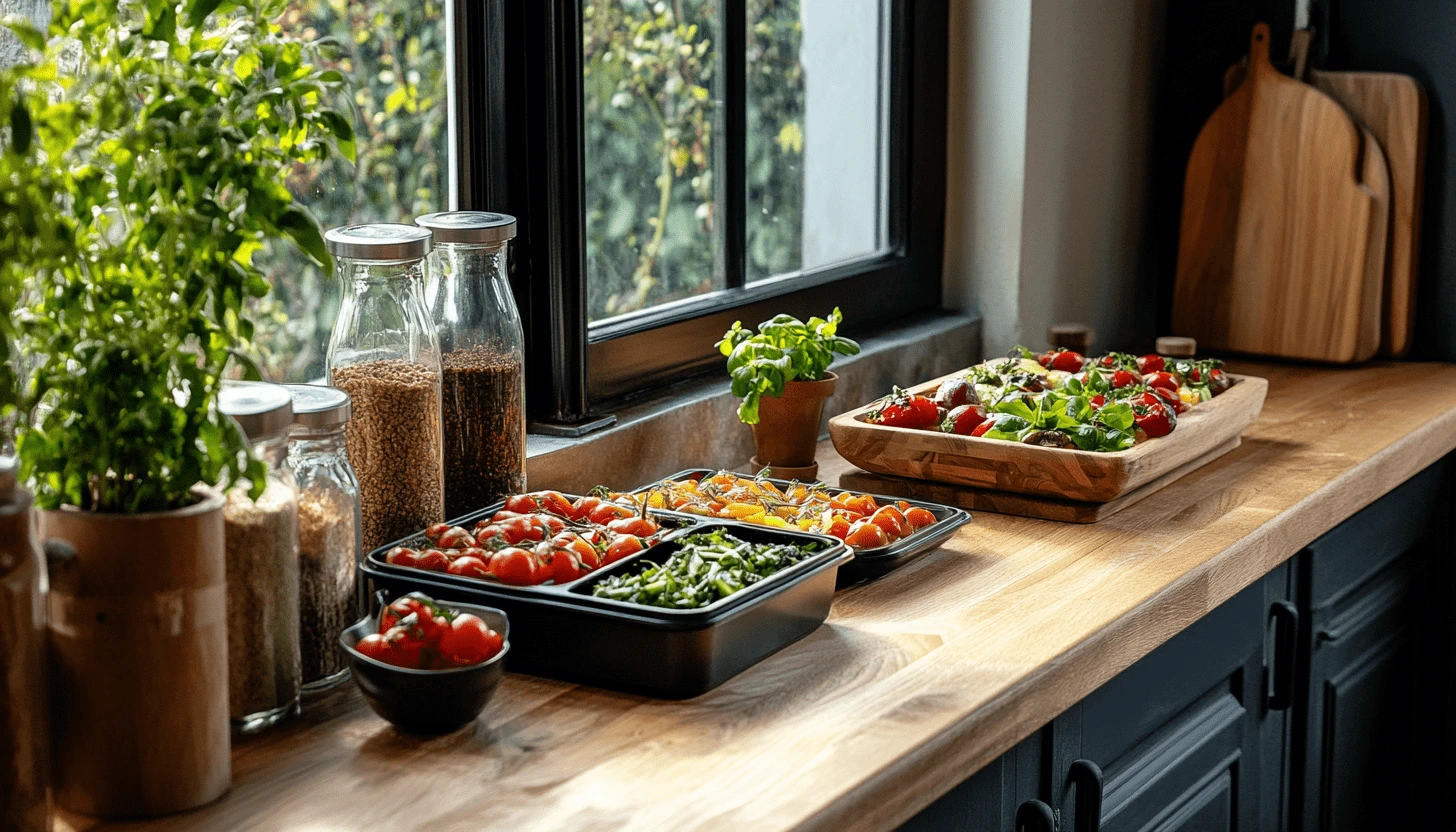
 

A beautifully arranged kitchen counter with fresh meal-prepped vegetables, herbs, and whole grains in natural sunlight, promoting healthy eating and meal preparation.


Barrier #1: “Eating Healthy Is Too Expensive”


Reality Check:


People often say healthy food is pricey, but a bag of lentils costs less than a Frappuccino. If money is tight, you don’t need organic dragon fruit and imported salmon—you need smart grocery shopping.


Solutions:


Buy in Bulk:


  • Research shows that buying staples like rice, oats, and beans in bulk can cut grocery costs by up to 30% (Harvard School of Public Health).
  • Think of it like Costco for your health—spend more upfront, save big long-term.


Prioritize Nutrient-Dense, Budget-Friendly Foods:


  • Instead of shelling out cash for overpriced “superfoods,” focus on cheap powerhouses like eggs, canned fish, frozen veggies, and bananas.
  • A study from The American Journal of Clinical Nutrition found that people who meal-prep using these basics reduce food costs by 25% and eat 50% fewer processed foods.


Ditch the “Healthy = Fancy” Mindset:


  • You don’t need $12 kale smoothies to be healthy.
  • A $3 homemade meal (chicken, brown rice, and veggies) beats a $10 fast-food meal both in nutrition and savings.


🧐 Thought-Provoking Question: If you wouldn’t put cheap oil in your car, why fuel your body with the cheapest, lowest-quality food available?


Barrier #2: “I Don’t Have Time to Eat Healthy”


Reality Check:

You know what else takes time? Scrolling TikTok for an hour, binge-watching Netflix, and waiting in line at the drive-thru. If you have time for those, you have time to eat healthy—you just need a better system.


Solutions:


Use the “Two-Minute Rule” for Healthy Snacks:


  • If it takes more than two minutes to prepare, you probably won’t do it when you’re starving.
  • Keep grab-and-go options like nuts, fruit, yogurt, and boiled eggs within reach.


Batch Cook Like a Boss:


  • Instead of cooking daily, spend 1-2 hours meal prepping for the whole week.
  • Studies show that meal-prepping cuts decision fatigue by 40%, making it easier to stay on track (University of Minnesota).


Simplify Your Meals:


  • You don’t need a five-star recipe for every meal.
  • Stick to “food formulas”:
    • Protein (chicken, tofu, fish)
    • Veggies (spinach, peppers, carrots)
    • Healthy carbs (quinoa, sweet potatoes, rice)
  • The less thinking required, the faster you’ll make healthy choices.


🧐 Thought-Provoking Question: If you’re too busy to eat right, are you really too busy—or just prioritizing other things?


Barrier #3: “I Crave Junk Food Too Much”


Reality Check:


You’re not weak. Junk food is literally designed to be addictive.


🧠 Mini Breakdown:


  • Processed foods trigger dopamine, the brain chemical responsible for pleasure (same chemical activated by drugs like cocaine).
  • This is why you can’t stop at one potato chip—it’s engineered to make you crave more (Dr. Robert Lustig, neuroendocrinologist).


Solutions:


Reset Your Taste Buds (Gradually!)


  • If you’re used to hyper-processed foods, healthy food will taste bland at first.
  • It takes 10-15 exposures for your taste buds to adapt to a new flavor (Journal of Nutrition & Dietetics).
  • Start by reducing sugar/salt intake gradually—your cravings will adjust.


Eat Protein & Fiber to Crush Cravings


  • Protein keeps you full longer than carbs or fat.
  • Fiber slows digestion, preventing blood sugar crashes that lead to cravings.
  • A University of Sydney study found that eating 30g of protein at breakfast reduces cravings by 60% later in the day.


Use the “Delay & Swap” Trick


  • Delay the craving for 10 minutes and see if it passes.
  • If you still want something sweet, go for dark chocolate, Greek yogurt with berries, or a protein smoothie instead of cookies or ice cream.


🧐 Thought-Provoking Question: Are you actually hungry—or just responding to a habit or marketing trick?


Barrier #4: “Social Pressure Makes It Hard to Eat Healthy”


Reality Check:


Ever had a friend say, “Come on, just one slice of cake won’t kill you!”? The problem isn’t the cake—it’s the guilt-tripping.


Solutions:


Own Your Decision—Without Explaining It


  • You don’t owe anyone an explanation for your food choices.
  • A simple, “I’m good, thanks!” shuts down most peer pressure.


Bring a Healthy Dish to Gatherings


  • That way, you always have an option, no matter what’s served.


Use Humor to Deflect Awkwardness


  • If someone gives you a hard time, reply with:
    • “I’m just trying to live past 40, man!”
    • “I’ll trade you one broccoli for your diabetes meds in 10 years.” (Only if they can take a joke.)


🧐 Thought-Provoking Question: Are your friends helping you become healthier—or dragging you down with them?


Conclusion: Small Steps = Big Wins


Healthy eating isn’t about never eating pizza again. It’s about setting yourself up for success with smarter choices.


🚀 Your Challenge: Pick ONE strategy from this article and apply it today.


  • Struggling with cost? Start buying bulk staples.
  • Short on time? Meal prep one recipe this weekend.
  • Craving junk food? Try the “Delay & Swap” trick.


Small steps lead to big changes. The key is consistency—not perfection.


So, what’s the one change you’re making today? Let me know—I’d love to hear it.


Related Articles

This will close in 20 seconds